
Space Software for the Satellite Based Augmentation System [SGAT]
![Space Software for the Satellite Based Augmentation System [SGAT] by Touch4IT](https://cdn.touch4it.com/sites/default/files/2023-12/SGAT%20%E2%80%93%20cover%20picture.jpg "Space Software for the Satellite Based Augmentation System [SGAT] by Touch4IT")
SGAT (SBAS Geometry Analysis Tool)
SGAT is SBAS Geometry Analysis Tool, where SBAS stands for a Satellite Based Augmentation System. The application has been developed by our software company Touch4IT, financed by the European Space Agency (ESA) as part of PECS. SGAT is a key project that has provided us with a wealth of expertise, experience, and knowledge, enabling us to develop similar space or aerospace-related projects.
Navigating ECSS Standards
We consider the greatest challenge in this project to be the need to adapt to the strict rules of the European Cooperation for Space Standardization (ECSS). As for limitations, numerous ideas for tool development emerged during the project. However, due to the predetermined budget, we had to limit them.
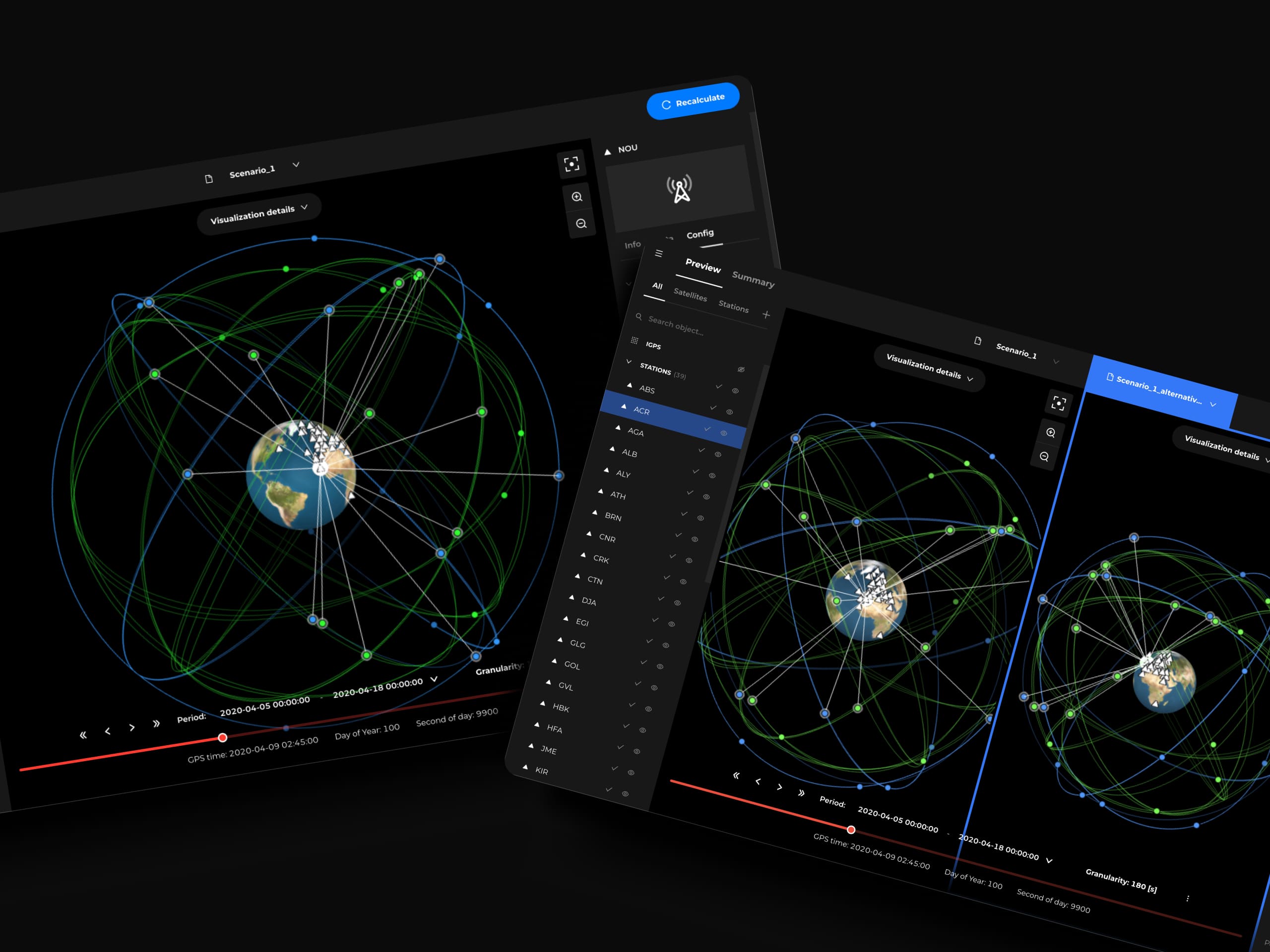
Innovating SBAS Geometry Analysis for Rapid, User-Oriented Space Industry Solutions
SGAT is SBAS Geometry Analysis Tool, where SBAS stands for a Satellite Based Augmentation System.
Key Features:
Definition of Satellite Constellations
Definition of Ground Stations and User Location
Definition of Ionospheric Grid Points
Line of Sights Calculations
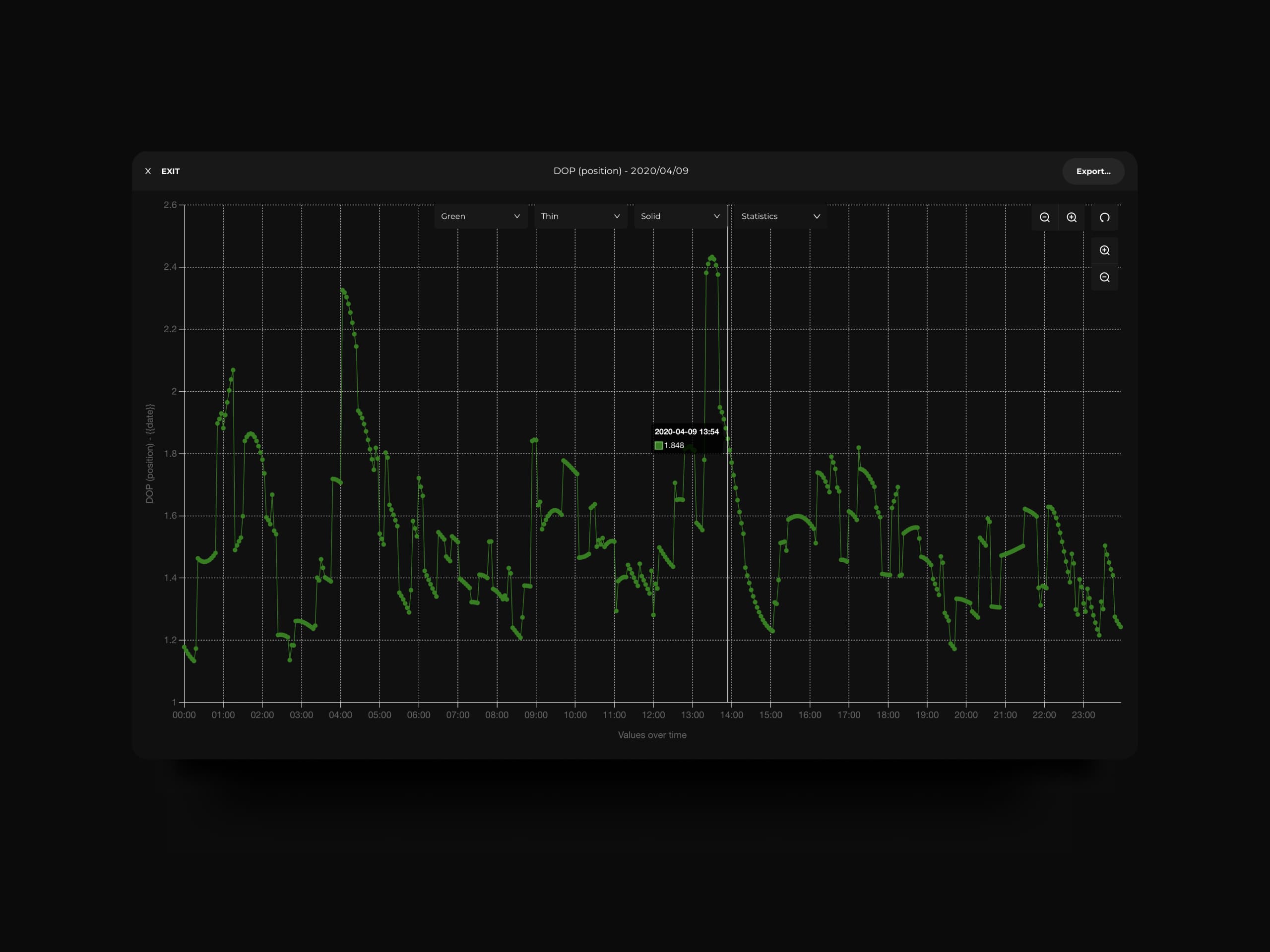
DOC Contour Plot Generation
Time Control
Granularity: Time Rate Up to 1 Second
Visualization Details Settings
Splitscreen Comparison
Ionosphere Geometry Analysis Calculations (IPP locations, IGP Performance Metrics)
Graphs: Viewing Angles, Dilution of Precision Calculations (HDOP, VDOP, TDOP, GDOP, PDOP)
Efficient Simulations: From Days to Hours in Minutes
The advantages of using SGAT:
- User-oriented, research-based design system
- Merging multiple tools into one
- Streamlined user experience
- Cuts down setup time from days to hours
- Our own implementation of industry-accepted algorithms
- Using fast computations, the app is able to create a 24-hour simulation in only 5 minutes
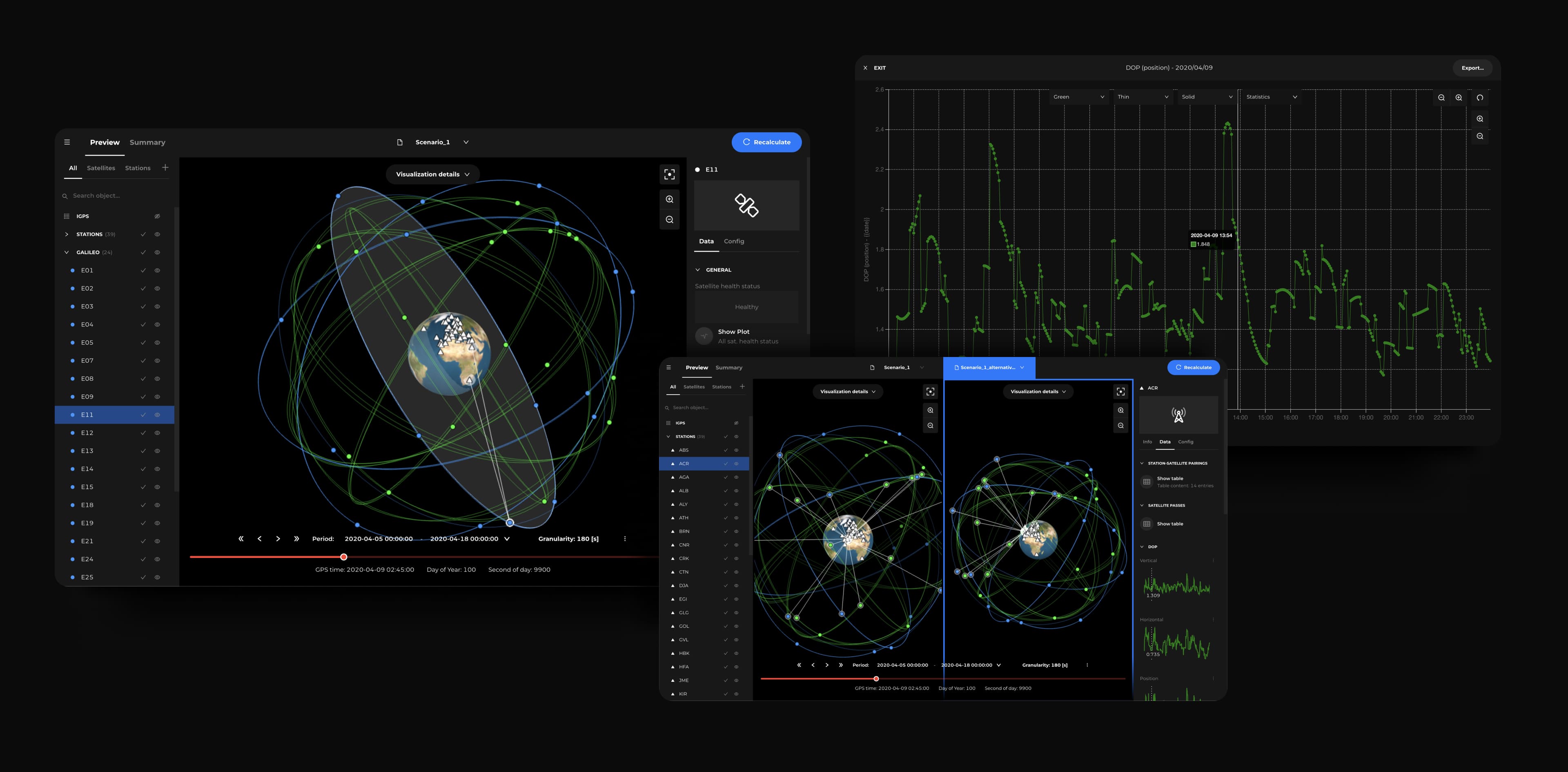
Adapting Software Development for the Space Industry with ESA Reviews and ECSS Compliance
The most important phase was adapting to the software development process for the space industry and performing it under highly stringent reviews conducted by ESA professionals. Additionally, ensuring compliance with ECSS - European Cooperation for Space Standardization was considered.
In the context of this tool, we have performed various integrations:
RINEX files
SP3 files
TLE files
SINEX files
Almanac files
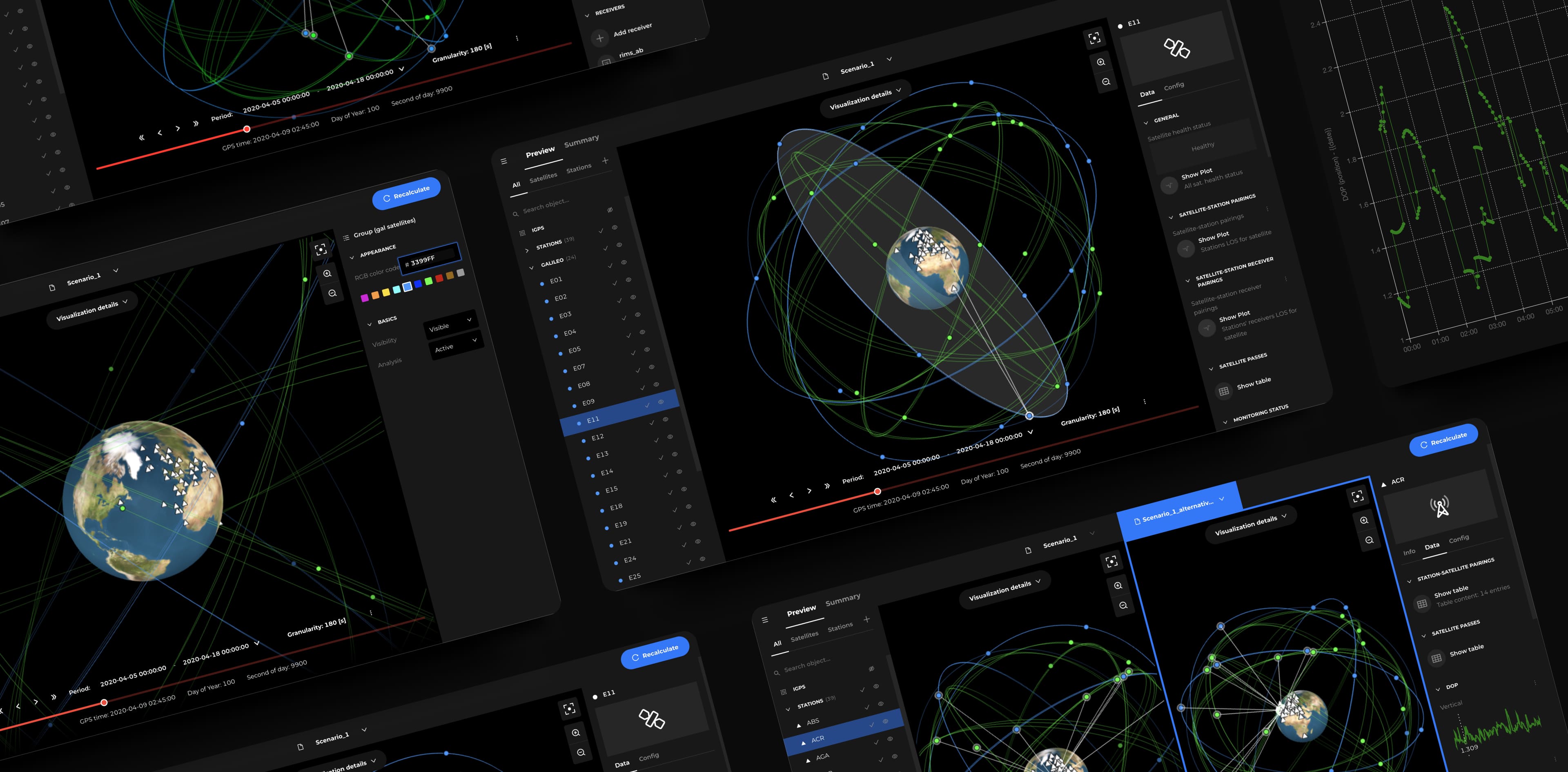
Transforming Space Industry Processes with Dedication and Expertise
We aimed to create a tool, gain experience, and establish a presence in the space industry. Despite challenges in meeting strict ECSS standards, SGAT not only overcame obstacles but also transformed several space industry processes. This tool includes features like defining satellites, ground stations, and ionospheric points, streamlining user experience, and reducing setup time. SGAT showcases our dedication to advancing space technology, giving us the expertise to develop more tools in the future.
Tech Stack





Get in Touch with Us
Fill in this form, or, if you prefer, send us an email. Don’t worry, we’ll send you an NDA and your idea will be safe.